When you release music or publish writing independently, there is no ticker-tape parade.
There is just the blue glow of your laptop screen at midnight, a button that says “Upload Complete,” and then: profound, deafening silence.
You refresh the dashboard. Three plays. One of them was your own test stream to check the stereo pan. Another was probably a bot scraping metadata in Dublin. The third was a friend who texted you three fire emojis and then never mentioned the project again.
This is the great filter of the modern independent artist. We are told by tech companies that we live in the golden era of democratization—that anyone with a laptop can reach the entire planet. But what they don't tell you is that when everyone has a microphone, the world becomes an echo chamber of white noise.
If your primary fuel for making things is external validation, you will quit within twelve months. You have to learn how to carve in stone when nobody is standing around to watch the dust fly.
The Poison of Real-Time Metrics
The worst thing that ever happened to artistic intuition was the analytics dashboard.
When you can see the exact second someone dropped off your song—when you can see listener demographics sliced by zip code and playlist placement—your creative mind starts reverse-engineering its instincts. You stop asking: “Does this chord progression break my heart?” and you start asking: “Will this keep someone from swiping away in the first four seconds?”
On Son Of Ink, I made a conscious decision: this is about authorship, not market fit. I wrote about permanence in a culture that treats art like disposable paper towels. When I removed the album from streaming platforms entirely, people asked if I was crazy. But that silence was deliberate. Not everything is meant to be passively consumed in an algorithmic shuffle while someone drives to a supermarket.
Some art is meant to be sought out.
Cold, Flat, Tallinn-Dorm Energy
When I was writing tracks for Controlled Demolition, I was living in Tallinn, Estonia. The winter there is not romantic; it is grey, flat, and quiet enough to hear your own blood pressure.
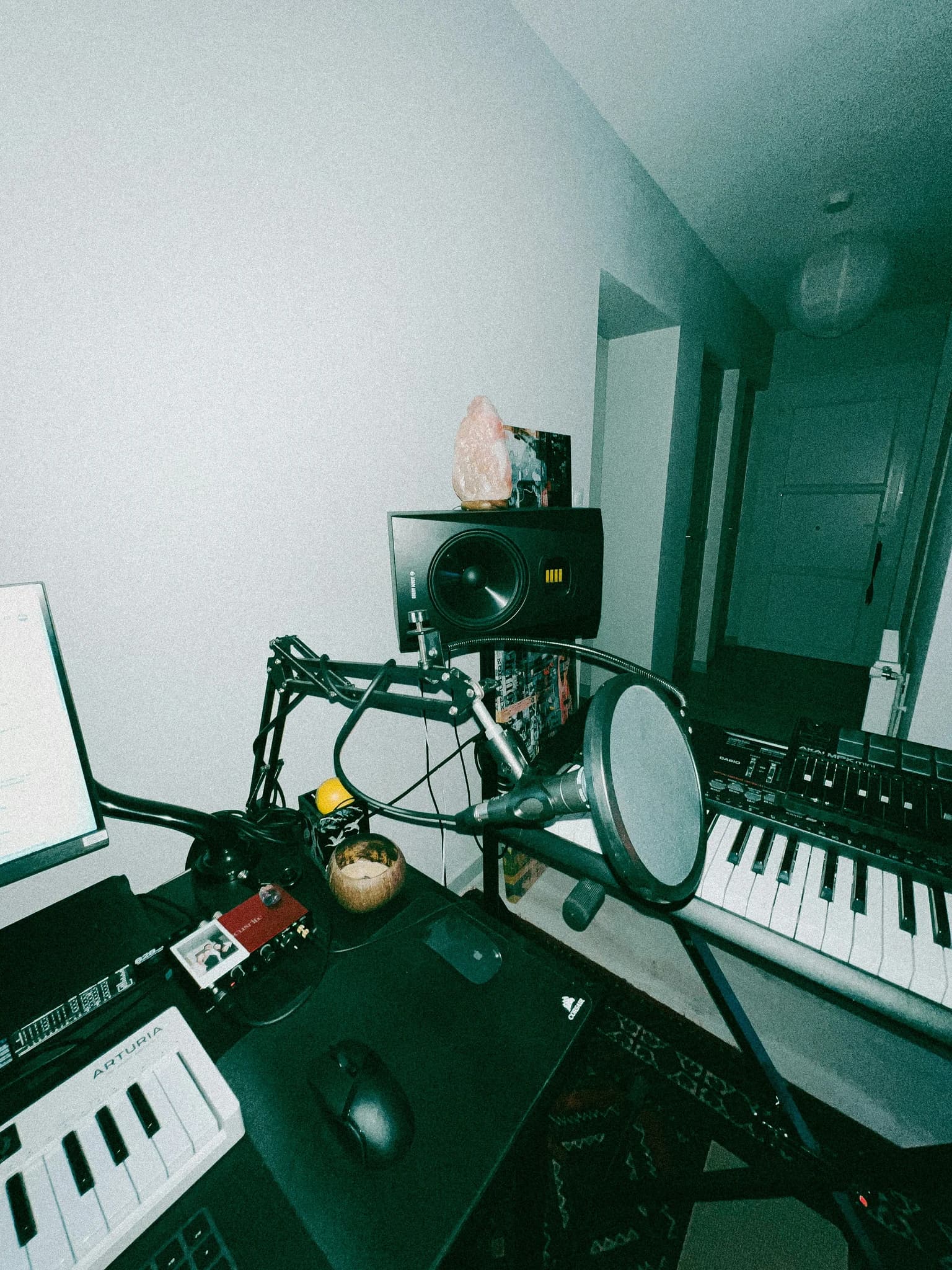
In that kind of isolation, you don't have the luxury of waiting for a wave of romantic inspiration. You look at the cold radiator, you look at your audio interface, and you realize that nobody is coming to save your project.
The work gets done because of a stubborn, irrational refusal to disappear.
"I'll never change my always changing ways."
— Controlled Demolition
True creative endurance isn't about being energized every morning. It’s about building a tolerance for the friction. It’s sitting in front of your tools on the days when you hate everything you’ve ever recorded, knowing that if you just keep chiseling away the excess stone, the shape will eventually emerge.
The Only Metric That Survives
Ten years from now, nobody is going to remember how many streams your single got in its first week. The algorithms will have shifted, the streaming platforms will have rebranded or died, and the social feeds will be replaced by whatever fresh dopamine casino comes next.
The only thing that will remain is whether the work was honest.
Did you tell the truth about what it felt like to be alive right then? Did you put your real name on it? Did you leave something behind that proves you existed?
If the answer is yes, you won't need to check the dashboard. The work is already done.